
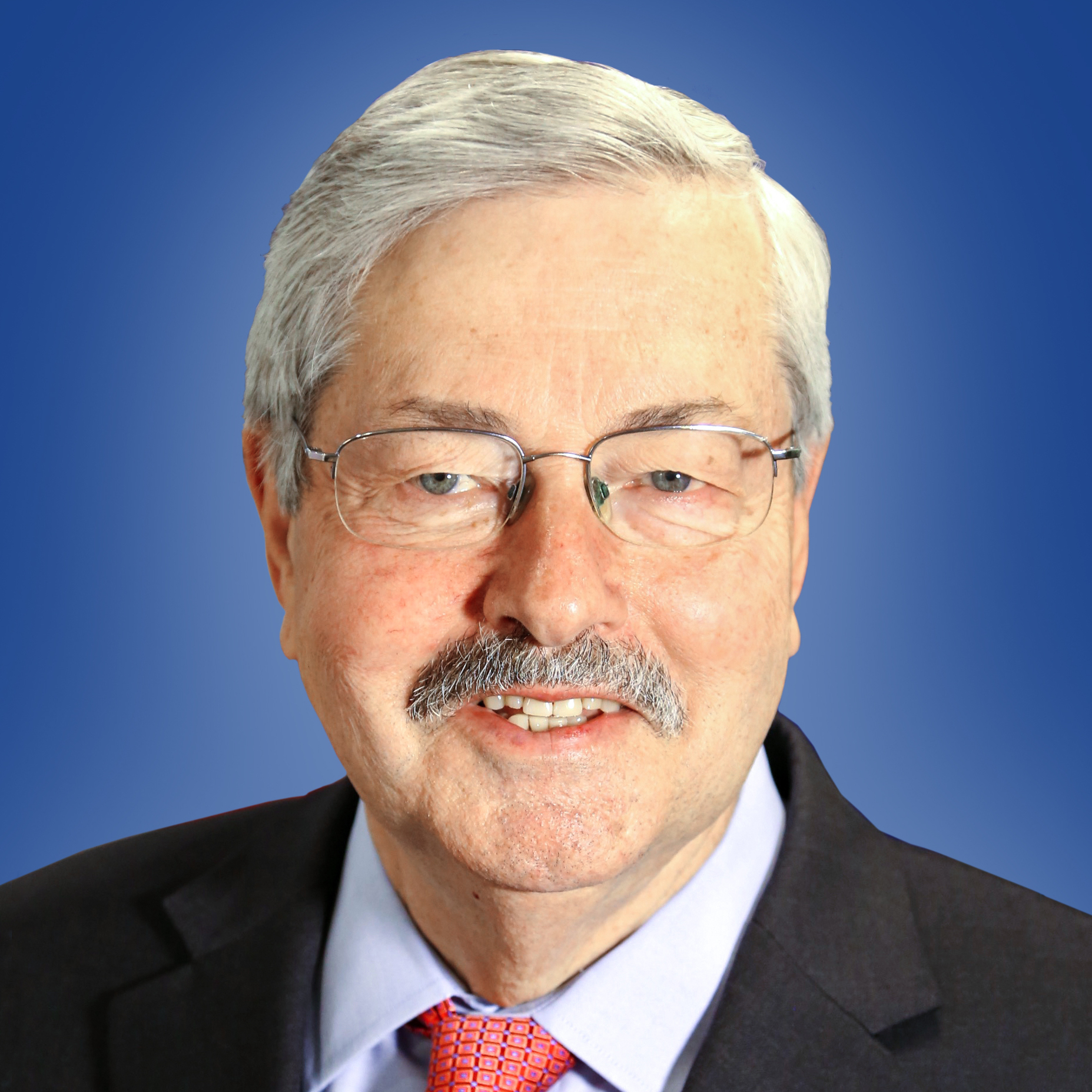
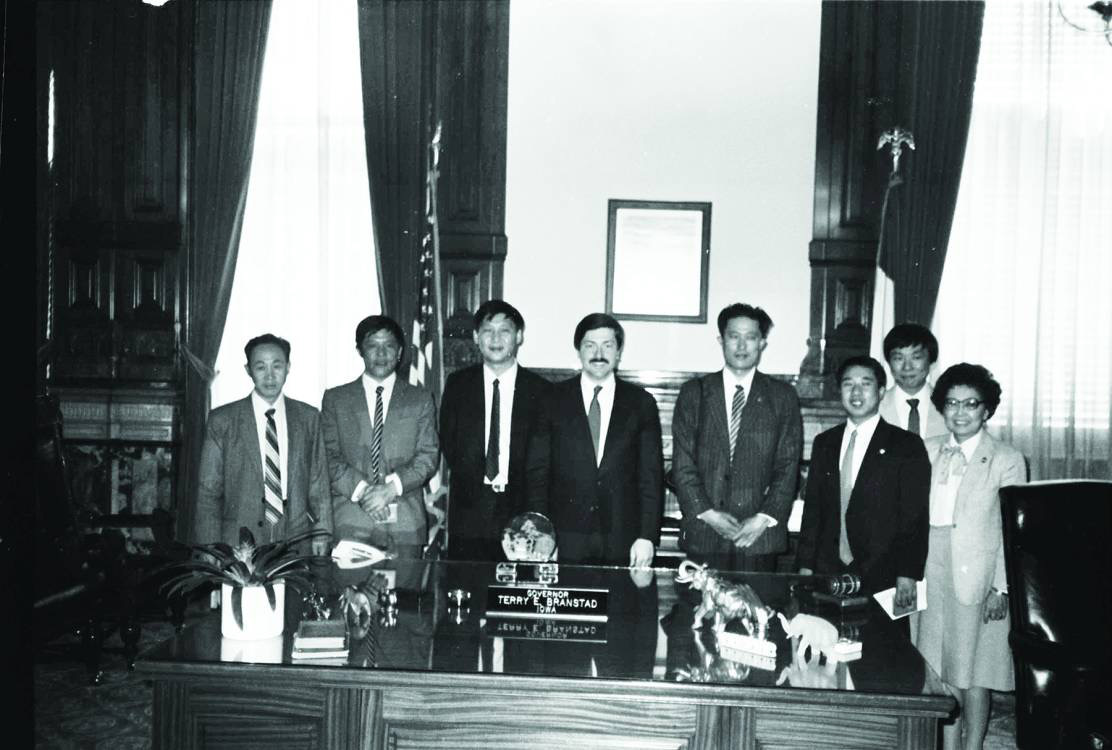
Terry E. Branstad is the former U.S. Ambassador to China and the longest-serving governor in American history. He is a founding partner of the Branstad Churchill Group. In 2016, Governor Branstad accepted a nomination from President-elect Donald Trump to serve as Ambassador of the United States to the People’s Republic of China.
Ambassador Branstad served as U.S. Ambassador to China during one of the most challenging periods in recent U.S.-China history. Unprecedented crises including the COVID-19 outbreak and the Chinese government’s closure of the U.S. Consulate in Chengdu, Ambassador Branstad led the largest drawdown of a single diplomatic mission in U.S. State Department history while evacuating over 1,300 staff members from China. He also created the Personal Protective Equipment for America Taskforce, which delivered 5,000 tons of urgently-needed medical supplies to the U.S. to combat COVID-19.
Ambassador Branstad’s two greatest achievements in China were the signing of the historic Phase One Trade Agreement between the U.S. and China in January of 2020 and lobbying the Chinese government to stem the flow of fentanyl into America. The Phase One Trade deal secured $200 billion in Chinese commitments to purchase U.S. goods and services in the agriculture, manufacturing, energy, and other sectors, achieved stricter enforcement of Intellectual Property protections, and opened up China’s restrictive financial sector to U.S. banks and other financial services companies. The Chinese government’s decision to schedule fentanyl as a controlled substance in May of 2019 virtually stopped fentanyl shipments into the U.S., saving thousands of American lives.
A native of Leland, Iowa, Branstad was elected three times to the Iowa House of Representatives, elected Iowa’s lieutenant governor in 1978, and elected as Iowa’s youngest governor in 1983. As the state’s chief executive from 1983 to 1999, Governor Branstad weathered Iowa’s farm crisis of the 1980s and led an economic boom in the 1990s.
At the end of his tenure as governor, Iowa enjoyed an unprecedented $900 million budget surplus and the enactment of historic government efficiency overhauls. Governor Branstad’s hands-on, round-the-clock approach resulted in a record-low Iowa unemployment rate of 2.5 percent when he left office in 1999.
Following his four terms as governor, Branstad served as president of Des Moines University (DMU). During his six-year tenure, the university grew into a world-class educational facility and became the first college in the U.S. to receive the Platinum Level of Recognition from the Wellness Council of America.
In October of 2009, sensing a need for change in the way state government operates and wanting to “lead Iowa’s comeback,” Branstad retired from DMU and was re-elected governor in 2010.
During his second tenure as Iowa governor from 2010 to 2017, Governor Branstad signed historic investments in Iowa’s infrastructure into law and expanded high-speed broadband internet to Iowa’s agricultural industry, schools, businesses, and homes.
Branstad also served as Co-Chair of the Council of Governors appointed by President Barack Obama, as Commissioner and Chairman respectively of the White House Fellows Program and Commission for Excellence in Special Education appointed by President George W. Bush, and as Trustee of the Harry S. Truman Scholarship Foundation appointed by President Ronald Reagan.
Branstad received a B.A. from The University of Iowa and a J.D. from Drake University Law School. Of the many factors behind his continued success in politics, academia, and the non-profit and corporate board worlds, Ambassador Branstad has always stuck to one personal mantra he often repeats: “Tough times never last, but tough people do.”